This is an English adaptation of a FoodBud historical article originally published on June 29, 2022.
According to Lanyu Culture, Lavazza built an immersive interactive museum at its headquarters that turns the brand’s 120-year family history, coffee heritage, and five generations of coffee dedication into a sensory visitor journey.
The Lavazza Museum is located inside the Nuvola Lavazza complex in Turin. Its experience combines coffee history, Italian industrial history, brand storytelling, and visitor-triggered technology. The central mechanic is a smart espresso cup used across five exhibition areas.
The museum’s smart coffee cup uses RFID, or Radio Frequency Identification, to activate interactive installations during the visit. Visitors place the cup in designated areas to start videos, projections, photography, and other media interactions.
The cup records the visitor’s route and interactions, then integrates the visitor’s personal information. At the end of the visit, it generates a personalized coffee profile and sends the visitor an email containing a visual record of the museum journey and a customized coffee recipe based on the experience.
The museum traces coffee traditions back to the 1800s and connects Lavazza family history with 20th-century Italian industrial history. Its two-level layout is divided into five main zones, designed to show the brand’s nearly 120-year development, coffee production, and Italian coffee social rituals.
Casa Lavazza focuses on the history of coffee and Lavazza’s development. The exhibition begins with the 1895 shop-opening contract signed by Luigi Lavazza and follows how the brand developed from there.
Lavazza was founded in Turin, Italy, in 1895 and has now passed to the family’s fourth generation. It is described as one of the world’s most important coffee roasters, with more than 3,000 employees.
Lavazza imports coffee beans from well-known producing regions around the world, including Spain; Colombia in South America; Guatemala and Costa Rica; Honduras in Central America; Uganda in Africa; Indonesia and Vietnam in Asia; and the United States and Mexico in North America.
The museum is also positioned as a key venue in the revival of Borgata Aurora, a former industrial area in Turin. The article frames coffee as more than a beverage: production, distribution, sharing, and enjoyment are part of everyday life globally. More than 27 billion cups of Lavazza coffee are consumed each year in more than 90 countries.
La Fabbrica presents the coffee production process and the discoveries made across different stages of Lavazza’s century-long production history.
Visitors follow the coffee supply chain from plant to espresso cup, experiencing the colors, sounds, and aromas of each stage: plantation, harvest, transportation to Turin, processing, and distribution. The zone emphasizes the roles played at each stage and the steps required for sustainable, high-quality work.
After the historical section, visitors use the espresso cup at an interactive table. The game-like interaction introduces less familiar coffee knowledge, including front-end processing, roasting differences, blending, and brewing.
If a visitor selects Arabica for planting, the interaction continues through watering, pest control, harvesting, and processing. The article notes that even in a game format, the process conveys the difficulty of coffee farming.
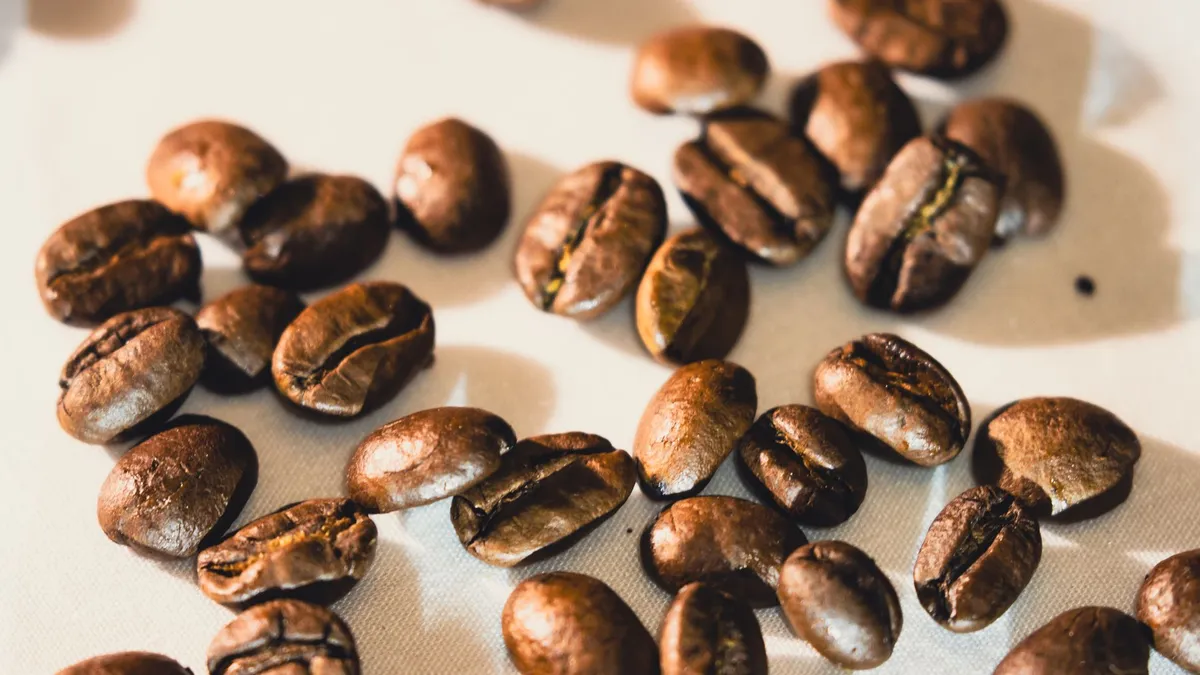
The next stage is roasting. Lavazza reorganizes complex roasting knowledge into a format general visitors can understand. When the screen is moved above beans of different roast levels, the data changes with the roast level, showing differences in appearance, flavor, aroma, and other attributes.
After the interactive sequence, visitors can see the result of their “work”: roasted coffee beans ready for household consumption, alongside Lavazza’s classic packaging and design.
La Piazza is based on a typical Italian square from the 1960s, when public squares were associated with social pleasure and people bought coffee from street bars. The gallery recreates that feeling while also displaying the first capsule coffee machine made for the International Space Station.
The story runs from the first espresso machine to espresso in space. The article highlights zero-gravity extraction technology, which enabled Italian female astronaut Samantha to become the first person to drink espresso in space on May 3, 2015.
The zone also references decaffeination technology, which allows caffeine-sensitive consumers to enjoy coffee by greatly reducing or removing caffeine while preserving flavor as much as possible.
L’Atelier displays the evolution of Lavazza trademarks, advertising, and product-related imagery, showing how the brand’s creative work developed over time.
Younger visitors can join educational workshops, while adults can revisit familiar characters from childhood: Caballero and Carmencita, legendary figures from the Italian television program “Carosello.” Visitors can also view the history of the Lavazza Calendar, created through collaborations with some of the world’s best-known photographers.
The studio area contains four stations where visitors can take photos with iconic figures from the company’s creative history.
L’Universo uses the smart Lavazza Cup collected at the entrance. A 360-degree multimedia projection uses the visitor information gathered by the cup to project a personalized Lavazza world. The cup also designs a dedicated coffee recipe for the visitor.
The zone draws on the experience and innovation of the Lavazza Training Center. Visitors can experience flavors created by the center, barista expertise, and product quality in a dedicated coffee experience area, including sensory surprises and unusual tastes.
The Lavazza coffee roasting factory is 15 minutes by car from the company’s headquarters. Before entering the factory, visitors can see trucks carrying green coffee beans. Instead of sacks, the factory uses tanker trucks with a 30-ton loading capacity to transport green beans. Each truck takes half an hour to unload the beans into the storage warehouse.
Inside the factory are 14 roasters, each with a 600 kg capacity. Staff said the 14 roasters can produce 400 tons of roasted coffee beans per day, operating in rotation 24 hours a day, with annual output reaching more than 100,000 tons. Despite the high output, the article describes the factory as clean and orderly, without a harsh roasting smell.
The article identifies three layers of consistency control:
The museum is presented as an example of regeneration in Turin’s Borgata Aurora industrial district and as a visitor attraction in its own right.