
News
Jun 20, 2026 · 7 min readThe China restaurant IPO wave: which models win, and the numbers that mislead
The 2026 China F&B Hong Kong IPO wave is record-breaking and sharply split — Mixue +130%, Nayuki −94%. A caliber framework for reading it: the franchise rate decides the basis, and the subscription multiple decides nothing.
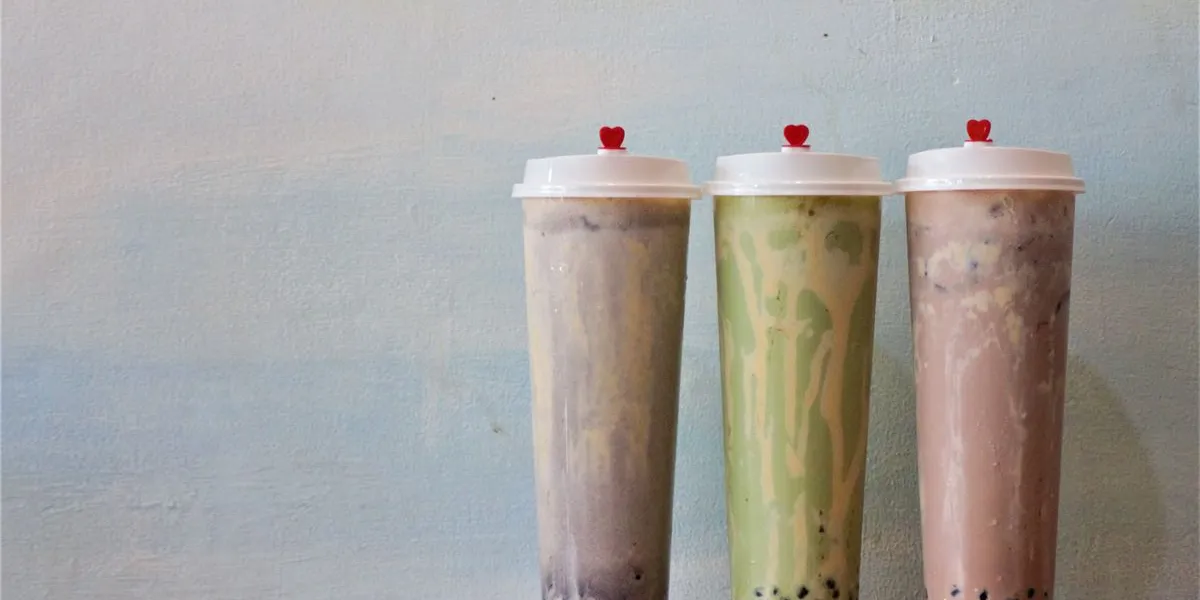
In 2025–26, Chinese food-and-beverage companies have rushed to list in Hong Kong in numbers the sector has never seen — a boom one tracker called the "year of the restaurant IPO." Bubble tea led (Mixue (opens in new tab), Guming, Auntea Jenny, joining earlier Nayuki and ChaPanda); fast-food and casual dining followed (Lao Xiang Ji, Yuanji Dumplings, Bigger Pizza, COMMUNE, Xiaocaiyuan, Green Tea); and even the suppliers came along (the seasoning maker Juhui (opens in new tab) and the restaurant-marketing platform Zaihui (opens in new tab)). The subscription manias have been spectacular — Mixue's retail tranche drew roughly HK$1.8 trillion in orders, a Hong Kong record, and Auntea Jenny's grey market was oversubscribed 3,616 times.
But here is the thing the manias hide: the wave is sharply split. Mixue is up about 130% from its IPO and Guming about 80%, while Nayuki has lost roughly 94% of its value since 2021 and ChaPanda has nearly halved since 2024. Same sector, same exchange, opposite outcomes — and the split is not luck. This piece is a framework for reading the wave: which models win, and which numbers will mislead you.
Why everyone is rushing Hong Kong
The structural backdrop first. Listing a restaurant on China's A-share market is famously hard — cash-heavy operations, food-safety scrutiny, related-party complexity, and a slow, uncertain review process have stalled name after name (Lao Xiang Ji (opens in new tab) withdrew its Shanghai bid after years of trying). Hong Kong, meanwhile, has optimized its listing rules, its consumer-sector valuations have recovered, and its process is faster and more certain. Add chains that have finally hit real scale and need capital for supply chains and expansion, and you get a stampede: dozens of F&B names, from tea to fast food to ingredients, all routing through HKEX in 2026.
The split: which models win
Strip away the first-day pops and a clear pattern emerges. The market is rewarding scalable, franchised, supply-chain-monetizing, value-priced models — and punishing capital-heavy, company-operated, premium ones.
- Mixue (蜜雪冰城) — up ~130%, market cap over HK$170 billion — is not really a tea retailer; it is a supply-chain franchisor. It runs ~45,000 mostly-franchised stores and makes its money selling ingredients, packaging, and equipment to those franchisees at a value price point. It is, in structure, the Domino's of bubble tea (see our Domino's deep-dive (opens in new tab)): an asset-light brand that monetizes its system through the supply chain, not through operating stores. The market loves it.
- Guming (古茗) — up ~80%, Tencent-backed — runs a similar franchised, regional-density model.
- Nayuki (奈雪) — down ~94% since its 2021 IPO (a HK$32 billion market cap shrunk to roughly HK$2 billion) — is the cautionary opposite: a premium, largely company-operated tea chain with heavy per-store capital and thin economics. ChaPanda (茶百道), down ~45% since 2024, sits in between.
The lesson isn't "tea IPOs are hot." It's that the model — franchise-and-supply-chain versus company-operated-and-premium — determines the economics, and the economics determine whether the stock survives the hype.
A caliber framework for reading the wave
This is where FoodBud's discipline earns its keep — two rules cut through the noise on any name in this wave.
Read the franchise rate first. The companies span a spectrum: from ~100% franchised (Yuanji Dumplings, Mixue) to mid-transition (Lao Xiang Ji (opens in new tab), converting company stores to franchises) to largely company-operated (Nayuki) — and where a company sits decides how to size it. For the franchised names, system-wide sales are not revenue: the GMV across all stores towers over the company's own top line. Mixue's ~45,000 stores ring up enormous system sales, but Mixue's revenue is mostly what it charges franchisees for supplies — a fraction of that GMV, exactly as a franchisor's revenue is a fraction of its system. Read a franchised chain by system sales for scale and by revenue for the company; never stack one on the other. For company-operated names (Nayuki), revenue is roughly the scale. Same wave, two different bases.
A subscription multiple is not durable value. Mixue's HK$1.8 trillion order book and Auntea Jenny's 3,616× grey market measure demand for the IPO, not the durability of the business. The proof is Nayuki: hyped in 2021, down ~94% since. The pop tells you about sentiment; the model tells you about the next four years.
Mind the layer. The wave isn't only operators. Juhui (opens in new tab) (the seasoning supplier) and Zaihui (opens in new tab) (the marketing platform) are supply-chain and demand-side layers — sized by revenue and customers, not system sales or stores. Don't apply operator yardsticks to them.
The cautionary precedent
The wave's optimism should be read against its own recent history. Nayuki listed in summer 2021 at HK$19.80, broke its issue price on day one (−13.5%), and has since lost the overwhelming majority of its value. ChaPanda, public barely a year, trades far below its issue price. The IPO is the start of the public story, not the finish — and in a wave this hot, the gap between the names that compound (Mixue) and the names that collapse (Nayuki) is the gap between a scalable model and a capital-heavy one wearing the same "new tea" label.
The caliber takeaway
The 2026 China F&B IPO wave is dazzling and bifurcated, and the way through it is to read the model, not the mania. The winners (Mixue, Guming) are franchised, supply-chain-monetizing, value-priced — structurally the Domino's playbook; the losers (Nayuki) are premium and company-operated. Do not read a subscription multiple as durable value, do not confuse a franchised chain's system sales with its revenue, do not apply operator metrics to the supply-chain layers (Juhui, Zaihui), and do not assume a static basis for a chain mid-transition (Lao Xiang Ji). Read each name by its franchise rate and its model, and the wave stops being a blur of hot tickers and resolves into a clear question: does this business scale capital-light, or does it scale capital-heavy? The first compounds; the second breaks issue.
It ties together the names we've covered this cycle — Juhui (opens in new tab) (supply), Zaihui (opens in new tab) (demand), Lao Xiang Ji (opens in new tab) (an operator mid-transition) — and the franchisor playbook it all rhymes with at Domino's (opens in new tab).
The 2026 China F&B HK IPO wave — the data card
| Name | Listing / status | Outcome / note | Model | Tier |
|---|---|---|---|---|
| Mixue (蜜雪冰城) | listed 2025 | +~130%; subscription ~HK$1.8T (record); mcap >HK$170B | franchised supply-chain ("Domino's of tea") | S1S2 |
| Guming (古茗) | listed 2025 | +~80%; Tencent-backed; mcap >HK$40B | franchised, regional density | S1S2 |
| Auntea Jenny (沪上阿姨) | listed 2025 | grey market 3,616× oversubscribed | franchised tea | S2 |
| Nayuki (奈雪) | listed 2021 | −~94% since IPO (HK$32B → ~HK$2B mcap) | premium, company-operated | S1S2 |
| ChaPanda (茶百道) | listed 2024 | −~45% since IPO | franchised, mid | S2 |
| Lao Xiang Ji (老乡鸡) | filed (3rd HKEX, Jan'26) | company-op → franchising; our piece (opens in new tab) | basis in transition | S1 |
| Yuanji / Bigger Pizza / COMMUNE | filed Jan'26 | light-asset / >99% franchise favored | franchised | S1S2 |
| Juhui (聚慧) | filed 2026 | seasoning supplier — our piece (opens in new tab) | supply-chain layer (revenue) | S1 |
| Zaihui (再惠) | filed 2026 | marketing SaaS — our piece (opens in new tab) | demand-side layer (revenue) | S1 |
Caliber notes. This is a thematic synthesis, not a single-company brief. The wave is bifurcated by model: franchised/supply-chain/value names (Mixue, Guming) compound; premium/company-operated names (Nayuki) break. Reading rules: (1) franchise rate decides the basis; (2) system sales ≠ revenue for franchised chains (Mixue's GMV ≫ its supply-selling revenue — a Domino's-style supply-chain franchisor); (3) subscription multiples ≠ durable value (Mixue's HK$1.8T book vs Nayuki −94%); (4) supply-chain layers (Juhui, Zaihui) are sized by revenue/customers, not operator metrics. HKD/RMB primary; USD approximate (HKD~7.8, RMB~7.15 per US$). Figures from listing disclosures (S1) and market data/coverage (S2); none are FoodBud locked operators except where cross-linked.
Sources. 2025–26 China F&B Hong Kong IPO coverage (CBNData, ThePaper, STCN, Deloitte/KPMG IPO reviews, China Fund); Mixue (subscription ~HK$1.8T, IPO HK$202.5 → ~HK$465, +~130%, mcap >HK$170B), Guming (IPO HK$9.94 → ~HK$17.94, +~80%, Tencent-backed), Auntea Jenny (grey market 3,616×), Nayuki (2021 IPO HK$19.8, −~94%, mcap HK$32.3B → ~HK$2B), ChaPanda (2024 IPO HK$17.5, −~45%); A-share-vs-HKEX listing dynamics. Cross-references: Juhui, Zaihui, Lao Xiang Ji, Domino's (C10), Mixue archive.