
News
Jun 21, 2026 · 7 min readSysco's $29 billion Restaurant Depot deal: sizing the distribution backbone beneath every restaurant
Sysco is buying Restaurant Depot's parent for ~$29.1B — the largest deal in its history, in the invisible distribution layer beneath every restaurant. A distributor is sized by revenue and share, not operator metrics; and the price isn't Sysco's scale.
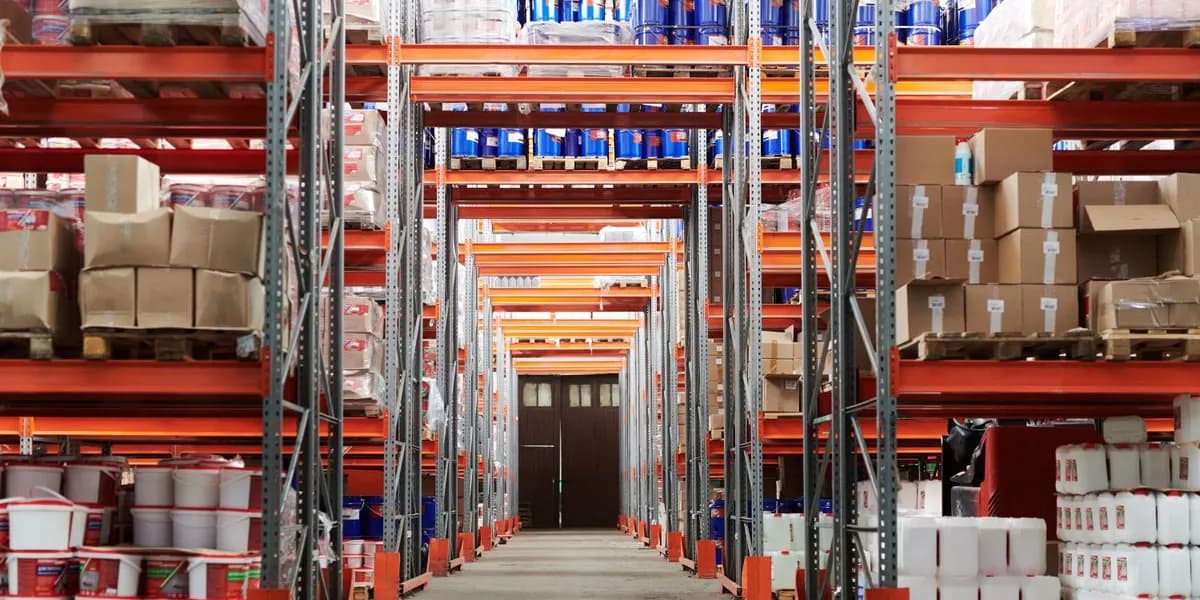
On 30 March 2026, Sysco — the largest broadline foodservice distributor in the United States — agreed to buy Jetro Holdings, the parent of Restaurant Depot, the country's largest cash-and-carry foodservice wholesaler, for about $29.1 billion. It is the largest deal in Sysco's history, and it lands in a layer of the industry FoodBud readers almost never see: distribution — the backbone that physically feeds the restaurants. Every chain we cover, from McDonald's to Lao Xiang Ji, runs on a supply chain; most of them don't build it themselves, they buy it. This deal reshapes who they buy it from — and it completes FoodBud's map of the foodservice value chain.
The layer you don't see — and how to size it
Sysco is not a restaurant; it's the plumbing beneath them. It buys food from producers and delivers it to roughly 700,000 customer locations — restaurants, hospitals, schools, hotels — generating around $80 billion in annual revenue.
That immediately changes how you size it. A distributor has no system-wide sales, no average unit volume, no store count of its own. Its scale is its revenue and its share of the distribution market — and confusing it with an operator's metrics is the same category error we flagged for the seasoning supplier Juhui (opens in new tab) and the marketing platform Zaihui (opens in new tab). Sysco, Juhui, and Zaihui are all non-operator layers; each is measured on its own basis, and none on an operator's.
Where Juhui makes the flavor and Zaihui drives the demand, Sysco moves the goods. Together they sketch the full chain: producers → distributors (Sysco) → ingredient/flavor suppliers (Juhui) → operators (the chains we cover) → demand platforms (Zaihui). The distributor is the biggest and most invisible link — and the one a $29 billion deal just consolidated.
The deal, and the pivot it represents
The structure: Restaurant Depot's owners receive $21.6 billion in cash plus 91.5 million Sysco shares (about 19% of the company, ~$7.5 billion in stock), for ~$29.1 billion total. Strategically, it's a pivot from delivered broadline into cash-and-carry — the self-serve wholesale-warehouse model (think a Costco for independent restaurants) that Sysco pegs as a $60–70 billion U.S. market it barely touches today. Restaurant Depot is the dominant player there, with a loyal base of independent operators who drive to a warehouse rather than take a Sysco truck. It's a higher-margin, faster-turning segment, and buying the leader is Sysco's way in.
The caliber lesson the market reaction teaches
Two numbers must not be confused, and the market's response shows why.
$29.1 billion is the price of the target; ~$80 billion is Sysco's own revenue; ~$40 billion was its market cap before the deal. So Sysco is paying a sum approaching its entire equity value, mostly in cash, for a business roughly a fifth its size — and the market flinched: Sysco's stock fell about 16% on the announcement, on fears about the debt required to fund $21.6 billion of cash consideration. The deal price isn't a measure of how big Sysco becomes; it's a measure of how much leverage it's taking on to get there. Read a transformative acquisition by its financing, not just its headline — a debt-funded deal of this scale changes the buyer's risk profile, which is exactly what the share-price drop priced in.
The market structure, and the antitrust shadow
Distribution is already concentrated, and this deal concentrates it further. Industry estimates put Sysco at ~17% of U.S. foodservice distribution, US Foods at ~10%, and Performance Food Group at ~8% — three players over a third of a huge, otherwise-fragmented market. Folding the #1 cash-and-carry wholesaler into the #1 broadline distributor invites intense regulatory scrutiny, and there's precedent: the FTC blocked Sysco's attempt to buy US Foods in 2015 on exactly these grounds. The fight, if it comes, will be over market definition — Sysco will argue broadline delivery and cash-and-carry are different markets (so the deal doesn't reduce competition), while regulators may argue they're close enough substitutes that combining the leaders raises prices for the independent restaurants who rely on both. For a FoodBud reader, the lesson is the one that runs through all our coverage: the answer depends on how you draw the boundary — define the market narrowly and Sysco's share looks modest; define it broadly and the deal looks dominant. Same company, two stories, depending on the denominator.
Why it matters: the backbone the whole industry rides
This is the deepest "picks-and-shovels" layer in foodservice. The chains FoodBud tracks compete on brand, format, and unit economics — but they all sit on top of a distribution and supply layer that decides their food costs, their consistency, and their ability to scale. Some operators vertically integrate to control it themselves — Domino's (opens in new tab) runs its own dough-and-supply network (a big part of why its company revenue is mostly supply chain), and Tim Hortons (opens in new tab) is similarly integrated. But most restaurants, especially independents and smaller chains, depend on distributors like Sysco and wholesalers like Restaurant Depot. A $29 billion consolidation of that backbone ripples up to every menu price in the country — which is why a deal in the layer nobody photographs is one of the most consequential in the industry this year.
The caliber takeaway
Sysco–Restaurant Depot is the distribution-layer lesson. Size Sysco by its revenue (~$80B) and market share (~17%), not by operator metrics it doesn't have. Read the $29.1B as a leveraged price (mostly cash, ~a fifth of Sysco's revenue, stock down 16% on debt fears), not as Sysco's new size. And read the antitrust question as a market-definition question — narrow vs broad changes whether ~17% is modest or dominant. Do not apply system-sales/AUV to a distributor, do not mistake the deal price for the company's scale, and do not read a share number without its market boundary. Sized correctly, this is the largest U.S. broadline distributor making a debt-heavy, antitrust-exposed bet to own the cash-and-carry backbone — a deal in the invisible layer that feeds every restaurant FoodBud covers.
It completes the value-chain picture alongside Juhui (opens in new tab) (ingredients) and Zaihui (opens in new tab) (demand) — the same non-operator layers now drawing investor attention across the 2026 China F&B IPO wave (opens in new tab) — and stands in contrast to the operators that build this layer themselves, Domino's (opens in new tab) and Tim Hortons (opens in new tab).
Sysco / Restaurant Depot deal — the data card
| Metric | Value | Basis / note | Tier |
|---|---|---|---|
| Deal value | ~$29.1B | $21.6B cash + ~91.5M Sysco shares (~$7.5B, ~19%) | S1 |
| Announced | 30 Mar 2026 | Sysco's largest-ever acquisition | S1 |
| Target | Restaurant Depot (Jetro Holdings) | #1 U.S. cash-and-carry foodservice wholesaler | S1 |
| Sysco scale | ~$80B revenue · ~700,000 customer sites | a distributor — sized by revenue + share, not system sales/AUV | S1 |
| Market reaction | stock −~16% on announcement | debt fears over $21.6B cash consideration | S1 |
| U.S. distribution share | Sysco ~17% · US Foods ~10% · PFG ~8% | concentrated; this deal folds #1 cash-and-carry into #1 broadline | S2 |
| Cash-and-carry market | ~$60–70B addressable (U.S.) | the higher-margin segment Sysco is pivoting into | S2 |
| Antitrust | precedent: FTC blocked Sysco–US Foods (2015) | likely scrutiny; fight will be over market definition | S1S2 |
| FoodBud status | not a locked operator | distribution layer (revenue basis); Sysco is public (SEC) | — |
Caliber notes. Sysco is a distributor, not an operator — scale basis = company revenue + market share, not system sales, AUV, or store count. The $29.1B is a (largely cash, leveraged) price, not Sysco's size (~$80B revenue, ~$40B pre-deal market cap); the −16% stock move prices the debt risk. The antitrust question is a market-definition question (broadline vs cash-and-carry as one market or two) — share looks modest or dominant depending on the boundary. Distribution-market shares (~17/10/8%) are industry estimates (S2); deal terms and Sysco financials are S1 (announcement / SEC). USD — no FX. Not a FoodBud locked operator — the distribution layer (cf. Juhui's ingredient layer, Zaihui's demand layer).
Sources. Sysco / Jetro (Restaurant Depot) acquisition announcement, 30 Mar 2026 (~$29.1B; $21.6B cash + 91.5M shares) and coverage (Mogin Law/Lexology on antitrust, FinancialContent on the −16% reaction, Rolling Out); Sysco revenue (~$80B) and ~700,000 customer locations (Sysco filings); U.S. foodservice-distribution shares (Sysco ~17%, US Foods ~10%, PFG ~8%) and cash-and-carry market sizing (~$60–70B); FTC's 2015 block of Sysco–US Foods. Cross-references: Juhui (supply layer), Zaihui (demand layer), Domino's (C10) and Tim Hortons / RBI (vertical-integration contrast).